Start With What Matters Most
Before looking at rings, it helps to define what the ring should communicate. For most couples, an engagement ring is a symbol of commitment — but the style, metal, and stone should reflect the wearer's personality and daily life, not just social expectations.
The four most important factors when choosing an engagement ring are: the centre stone, the setting style, the metal, and the budget. Understanding how these interact will make your decision far easier.
"A great engagement ring doesn't need to be the most expensive one — it needs to be the right one."
Understanding the 4Cs
The 4Cs — Cut, Colour, Clarity, and Carat — are the international standard for evaluating diamond quality. Each one affects both appearance and price.
Cut — The Most Important C
Cut determines how well a diamond reflects light. A well-cut diamond will appear more brilliant even if it has lower colour or clarity. Always prioritise cut quality above the others. Look for Excellent or Very Good cut grades in a GIA report.
Colour
Diamonds are graded from D (colourless) to Z (noticeable yellow). For most engagement rings, F–H colour diamonds offer the best balance of quality and value. D–E stones command a premium that is often invisible to the naked eye.
Clarity
Clarity refers to internal inclusions and surface blemishes. For most people, VS1–VS2 or even SI1 stones are eye-clean (no inclusions visible without magnification), and represent excellent value. Flawless and Internally Flawless stones are rare but rarely necessary.
Carat
Carat is the weight of the diamond, not its size. A well-cut 0.90ct stone can appear larger than a poorly cut 1.00ct stone. If budget is a concern, consider a slightly lower carat weight with better cut — you'll often get a more brilliant stone.
Setting Styles Explained
- Solitaire — A single stone on a plain or pavé band. Timeless, versatile, the most popular choice worldwide.
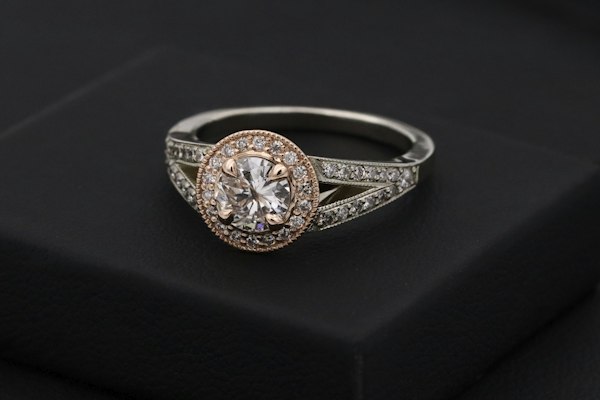
- Halo — A centre stone surrounded by a ring of smaller diamonds. Makes the centre stone appear larger. Excellent light return.
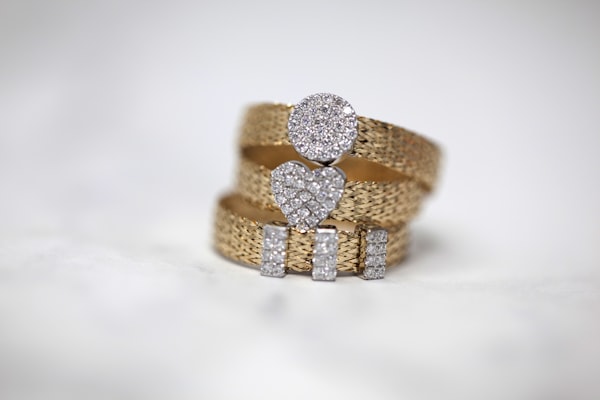
- Pavé / Pavé Band — Small diamonds set closely along the band. Adds continuous sparkle at a relatively modest cost.
- East-West — The centre stone sits horizontally across the finger. Modern, architectural, distinctive.
- Bezel — The stone is enclosed by a metal rim. More protective, cleaner aesthetic, suits active lifestyles.
Choosing the Right Metal
The three most popular metals for engagement rings are 18K White Gold, 18K Yellow Gold, and 18K Rose Gold. Platinum is also an excellent choice — naturally white, hypoallergenic, and extremely durable — though it commands a higher price.
For everyday wear, 18K gold (75% pure gold) offers the best balance of durability and appearance. Anything lower than 18K tends to show more wear over time.
Setting a Realistic Budget
There is no universal rule. The old "two months' salary" guideline is a marketing invention. A thoughtfully chosen ring at any price point will be meaningful if it reflects your partner's taste and your sincerity.
As a rough guide for Bangkok buyers in 2026: entry-level GIA-certified diamond rings start from around ฿80,000–120,000 for a 0.5ct stone. One-carat GIA-certified rings typically range from ฿150,000–350,000 depending on quality grades and setting complexity.
"The most important thing is that the ring was chosen with thought — not just purchased with budget."
Working With a Specialist
At Adamas, we offer complimentary consultations — in person at our Bangkok atelier or via LINE. We can help you understand exactly what you're looking at, compare options side by side, and make an informed decision without any sales pressure.
We believe jewellery buying should feel calm and considered, not rushed or confusing.
Book a Complimentary Consultation
Visit our Bangkok studio or speak with a specialist via LINE. No pressure, no obligation.